Repère Architectural | News
If you manage a commercial or institutional building in Quebec or the Ottawa region, you know the sequence. November arrives. Salt and abrasives go down. People track brine in on their boots, and for five months every entrance in the building takes a daily chemical treatment nobody specified for.
Then March comes. The bottom of the frame is pitted. The paint is blistering. The threshold is corroded. And in three years it’s a replacement.
The usual reflex is to treat this as a purely functional decision: accept an industrial-looking door, give up on appearance. That trade-off is no longer necessary.
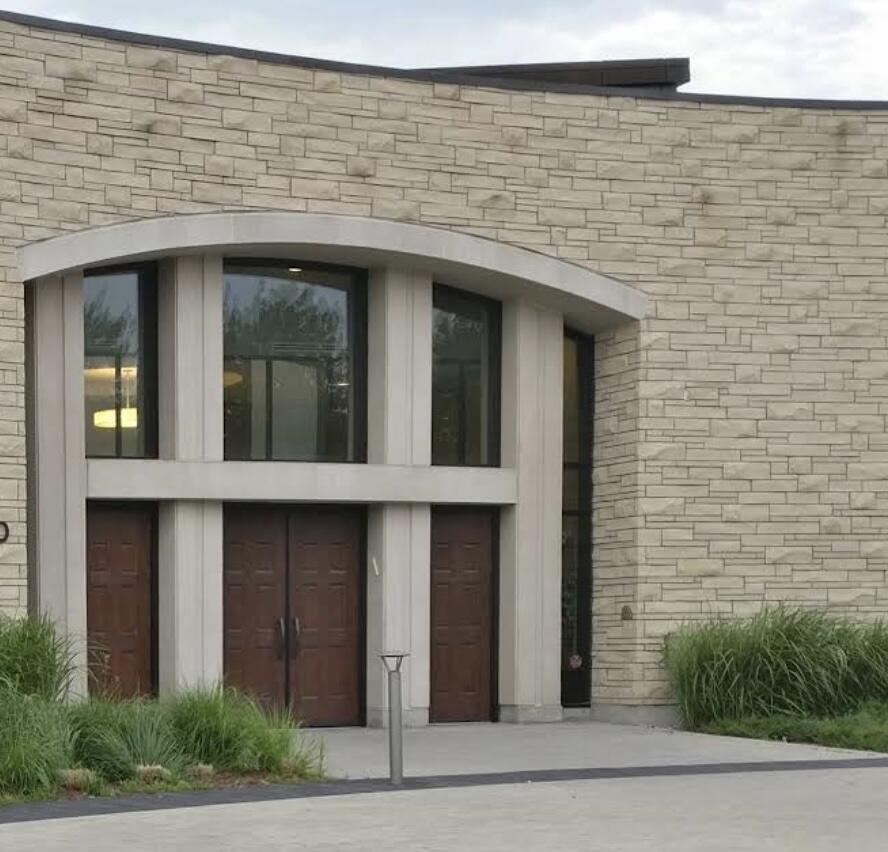
Four challenges specific to our winters
1. Chloride as a daily corrosive. Road salt doesn’t stay in the parking lot. It gets carried inside, dissolved by melting snow, and pools at the base of frames and thresholds. That’s precisely the corrosion mechanism that destroys steel, and a hollow metal entrance frame is rarely built to survive twenty years of it.
2. Thermal bridging. An entrance door separates −25 °C from +21 °C. On a poorly detailed frame, that differential produces condensation on the interior face, which runs down, collects, and feeds corrosion from the inside, where nobody inspects.
3. Mechanical de-icing. Shovels, scrapers, plows, salt bags dragged through the vestibule. Building entrances take a physical beating in winter that has nothing to do with the rest of the year.
4. Deferred maintenance. Repainting a corroded frame requires a weather window. In Quebec that window is short, and the work gets pushed to next summer, while the corrosion keeps going.
Nine reasons to specify Special-Lite
1. No corrosion, ever. FRP doesn’t rust. This isn’t improved resistance or a protective coating: the material itself simply doesn’t react with chloride. Special-Lite backs this with a limited lifetime warranty against corrosion.
2. Waterproof by construction. The pultruded AF-100 door is hermetically sealed, with a 6 lb/ft³ closed-cell polyurethane foam core wrapped in four layers of glass fiber reinforcement and resin-encapsulated to 1/8″ on both faces. There’s nowhere for water to get in.
3. A core that does structural work. On the FRP/aluminum hybrid doors, polyurethane foam is injected after the door is fully assembled. It bonds to the stiles, rails, reinforcements and face sheets, turning the assembly into a solid, fully sealed unit: impact resistance, flexural strength and thermal insulation from a single component.
4. Impact resistance. The 1/8″ resin encapsulation and 9/16″ solid FRP structural stile edges give superior impact resistance and screw-holding capability, which matters on a door people shoulder open with gloves on and their arms full.
5. Thermal performance. The closed-cell foam core insulates considerably better than hollow metal, reducing interior condensation and heating load at the entrance.
6. Takes the specified hardware. Standard and optional internal reinforcements provide secure attachment for the exact hardware in the spec. The 6″-deep top rail with 1/4″ wall thickness accepts a closer without additional reinforcement.
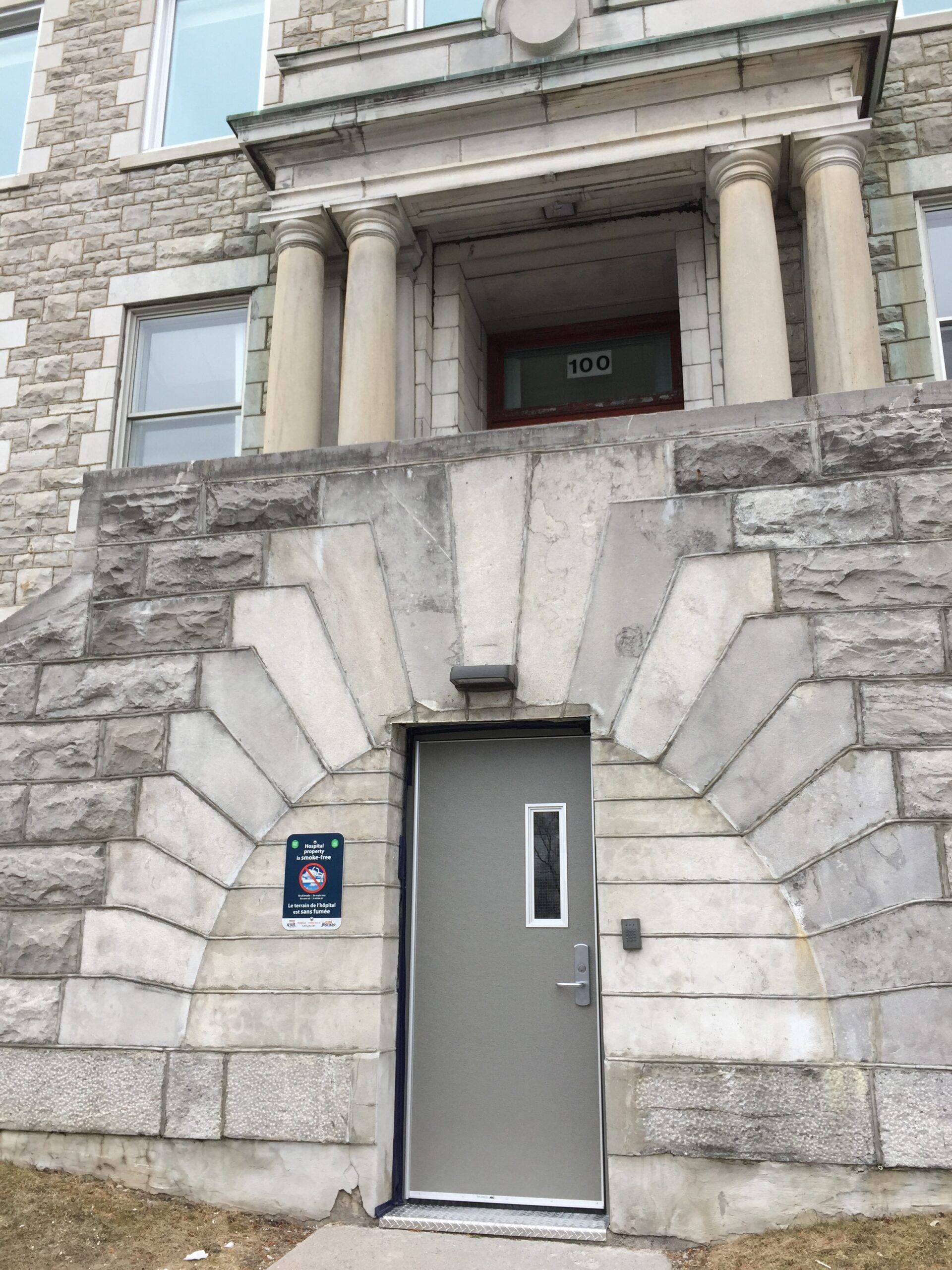
7. Direct hollow metal replacement. The HMR-FRP line is sized to fit existing standard steel door openings. For a building with entrances due for replacement, that avoids reworking the masonry and frame.
8. Cleanable and compliant. Sealed surfaces, easy to clean and sanitize, meeting FDA and USDA guidelines. That’s relevant for healthcare, commercial kitchens and laboratories.
9. A warranty that holds up. A 10-year, 100% parts and labor warranty, plus a limited lifetime warranty covering corrosion, corner joinery failure, core deterioration and face delamination.
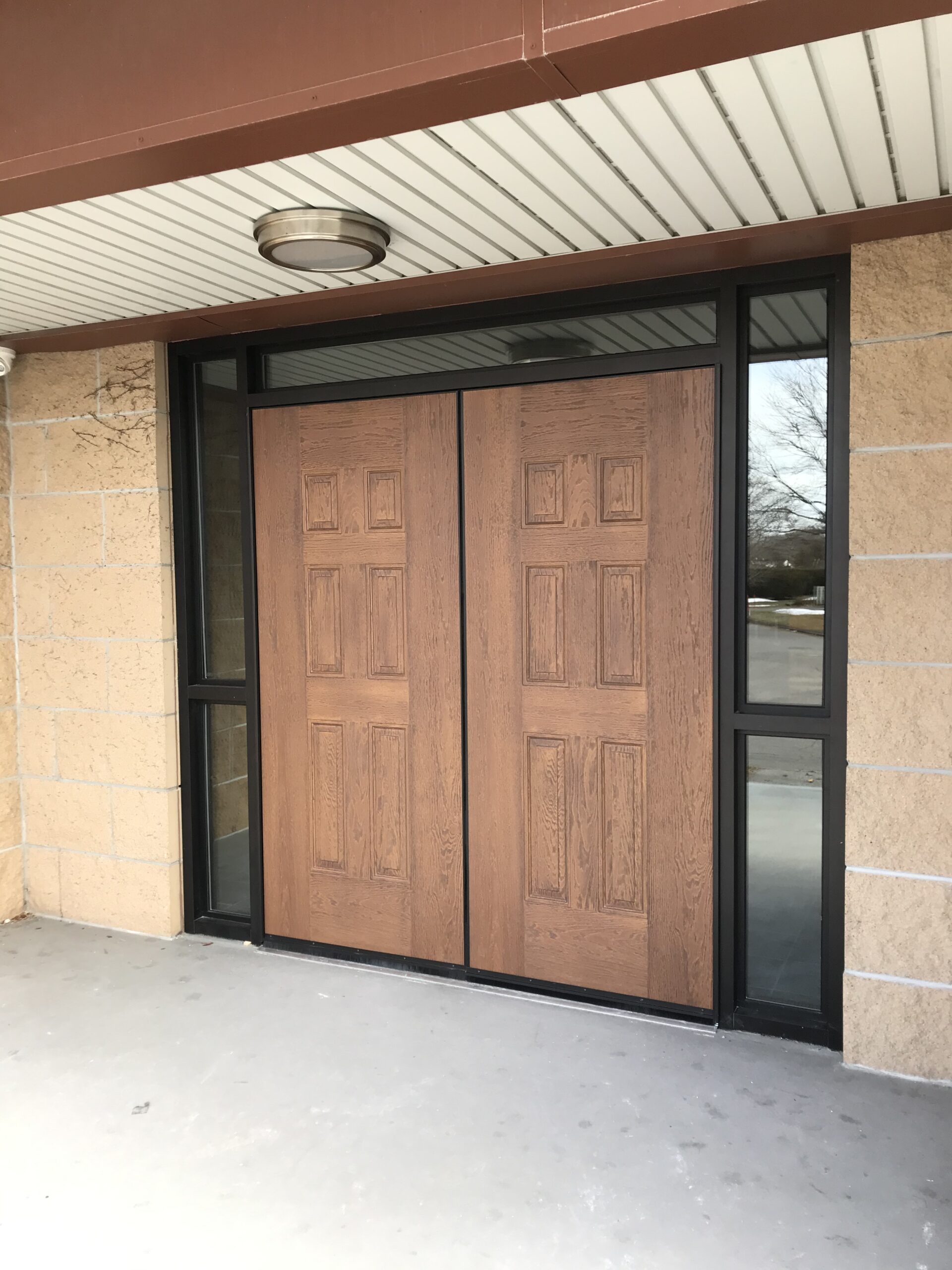
Aesthetics are no longer the price of durability
This is the part most people don’t know: a door engineered to survive road salt doesn’t have to look like a factory door.
Special-Lite’s wood grain FRP face sheets replicate the species down to the grain detail: oak, walnut, cherry, mahogany, maple, teak, among others. On the SL-18 and SL-19 models, the .120″ face sheet is Class A and never warps, splits, peels or rots. It resists stains, scuffs and impacts that would easily damage real wood, and it holds up in corrosive environments, including coastal salt spray.
Put plainly: the entrance to an office building, a school or a community centre can have the warmth of a walnut door while being the toughest door in the building.
Special-Lite also offers the Wood Expressions decorative finish on aluminum, which lets the frame and adjacent components match the door face.
The only maintenance is the finish
This is the essential difference from a wood or hollow metal door.
On a corroded hollow metal door, maintenance is repairing structural damage. The substrate itself is degrading. On a wood door, moisture, warping and rot attack the door itself.
On a wood grain FRP door, the door doesn’t degrade. Only the clear finish coat wears over time under UV exposure. Special-Lite recommends refinishing wood grain doors every seven to ten years, depending on climate and exposure, and provides step-by-step instructions, a video and a stain kit to do it.
The process removes the existing clear coat without touching the underlying stain. It’s an appearance operation, not a repair.
And on the other FRP models, upkeep is simpler still: most are refreshed with a straightforward repaint, like a metal door, except there’s no rust to deal with first. The HMR-FRP line requires no painting at all.
The real calculation
A fiberglass door costs more up front than hollow metal. That’s true, and it should be said plainly.
But the relevant number isn’t acquisition cost. It’s twenty-year cost. A hollow metal frame at a main entrance, in our climate, means recurring repaint cycles, a refurbishment or replacement around year ten, and an entrance out of service while the work happens. Over that horizon, the initial gap closes, then reverses.
That’s the argument to bring to the building owner, not to the bidder.
We represent Special-Lite across Quebec and the Ottawa and National Capital Region. For a lifecycle cost analysis on a live project, wood grain finish samples, or specification support, get in touch.